

Ensuring the quality of pharmaceutical products is an important task. After all, if a manufacturing mistake produces a batch that dissolves slower than normal, patients might accidentally take an extra dose, thinking that they need the added medication to receive the care they need. While these mistakes are rare, it’s still essential for pharmaceutical quality assurance professionals to test the rate at which drugs dissolve. How do quality assurance experts measure that rate to ensure batch consistency? With the help of dissolution testing. What is Dissolution Testing? Before we can define dissolution testing, we’ll need to look at a few.. READ MORE »

Last week, a group of AAPS students performed an identification (ID) test on Acetaminophen drug substance with High Performance Liquid Chromatography (HPLC). Acetaminophen – brand name Tylenol is over the counter drug that could treat headaches, muscle aches, arthritis and reduce fever. This experiment in our Quality Control (QC) laboratory provided students with hands-on experience preparing in standards, samples and mobile phase. Furthermore, students learned how to set-up the HPLC and how to operate the HPLC software, Empower/Millennium. HPLC labs, such as this one, are particularly valuable to students because they prepare them with the necessary technical skills needed for.. READ MORE »

Drug research is essential to helping medicine advance and finding new ways of fighting illness, but it is a long and complicated process. Just one in every 5,000 compounds that enters preclinical testing actually make it to the marketplace, and companies spend approximately US$500 million per product, with studies taking anywhere from 8 to 15 years. For regulatory affairs professionals involved in new drug development, the barriers to making potentially beneficial products available to the public can sometimes be frustrating. Nevertheless, the regulations are necessary to ensure that drugs are safe and effective. So how does a new drug get.. READ MORE »

High Performance Liquid Chromatography (HPLC) is a technique used to analyze samples in a variety of industries, from biological to environmental to industrial and beyond—even throughout the food, drink, and pharmaceutical industries. To master HPLC, you must learn to use chemical techniques to study organic and inorganic compounds in order to analyze their chemical properties. Specialized training can teach you safe and effective ways to identify, separate, quantify, and ultimately purify a wide variety of chemical compounds, regardless of their volatility or stability. But with the risk of impurities ever present, it’s important to ensure contaminants don’t sabotage your future.. READ MORE »
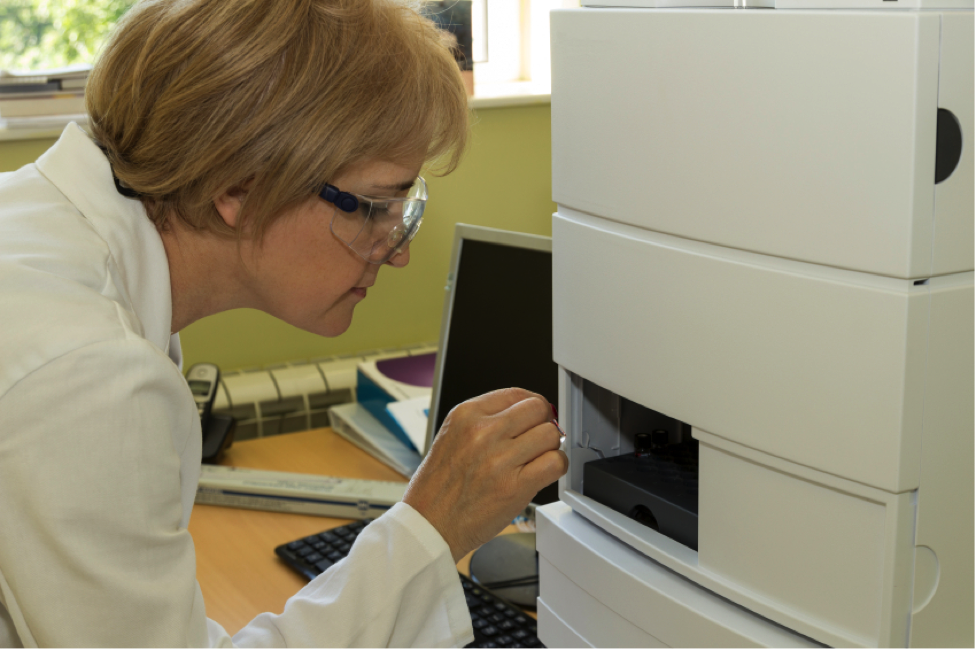
With HPLC training, you can take your pharmaceutical career to new heights by exploring opportunities in a range of fields, including in medical device manufacturing, healthcare and clinical research – among many other possible options. If you are planning to enroll in HPLC courses, or you have recently started your program, read on to learn more about HPLC and how it works. What is HPLC? HPLC, or High Performance Liquid Chromatography, is one of the most common techniques used for separating and purifying organic and inorganic compounds in order to analyze them. Professionals in HPLC careers know that different compounds.. READ MORE »

A career in Regulatory affairs involves doing research and other work that directly impacts the lives of others. If you choose to pursue this career path, you’ll be involved in the research and development of pharmaceuticals, natural products, cosmetics and supplements. On any given day, you’ll be in charge of compiling safety information about a product, negotiating with authorities who control licencing, overseeing clinical trials, and much more. If you are planning to pursue regulatory affairs courses, or have already begun your program, read on to find out what steps you can take to prepare for a job interview once.. READ MORE »
There are many openly available drugs on the market that, despite their health benefits, are known to sometimes have adverse effects on humans. Codeine, which is commonly found in both over the counter and prescription medications, is one of them. New research has shown that children are actually becoming more susceptible to the adverse effects of codeine. After several recent deaths due to codeine intoxication, pharmaceutical experts are now advising doctors and parents to stop providing children with medication that contains this seemingly harmless drug. If you’re planning to take a pharmaceutical drug safety course, or have already in enrolled,.. READ MORE »

Natural health products (NHPs) are over-the-counter substances that can normally be purchased in any health store or pharmacy. Some common substances that are categorized as natural health products include: vitamins and minerals, herbal medicines, energy drinks and probiotics. Pharmaceutical industry professionals know that all NHPs sold in Canada are subject to the Natural Health Product Regulations, under the authority of the Food and Drugs Act. These regulations are implemented to address Canadians’ concerns about NHP safety and availability as well as regulate their sale, manufacturing, packaging, labelling and distribution processes. Students pursuing pharmaceutical careers will soon learn all about natural.. READ MORE »

Congratulations go out to AAPS’ Pharmaceutical Students who recently wrote exams on . The exam was made of two parts: written and practical tests. Students were asked to answer questions on analytic chemistry and later asked to demonstrate their learnings in AAPS’ state-of-the-art laboratory. “This is the first time we’ve asked students to demonstrate their knowledge in person” says instructor, Jason Chu. “This form of evaluation benefits the students in developing their practical skills for the pharmaceutical industry.” Chu is newly welcomed to the AAPS Faculty and joins AAPS with 5 years of experience as a Quality Control Research and.. READ MORE »

Working in quality assurance for medical marihuana production facilities requires an in-depth knowledge of Health Canada’s guidelines for good production practices. As medical marihuana continues to expand as an industry, there is more and more need for professionals who have taken quality assurance courses, specializing in medical marihuana production. Read on to discover today’s standards for producing medical marihuana, and how a quality assurance department helps maintain these standards. Premises Every medical marihuana production facility in Canada must be licensed by Health Canada in order to legally grow medical marihuana under Marihuana for Medicinal Purposes Regulations (MMPR). The sizes of.. READ MORE »