

This week, we’re taking a look at some of the promising discoveries that have appeared over the last few months. They all share something in common: they all have roots in our ongoing efforts to understand the human genetic code and the biological processes surrounding it, part of a trend that’s opening up a whole range of new cures and treatments. Pharmaceutical discoveries and possible new treatments Messenger RNA (mRNA) normally serves an important role in copying DNA, as part of its transmission. Clinical research-oriented company, CureVac has partnered with pharmaceutical giant Janssen to build on existing, promising research. The.. READ MORE »
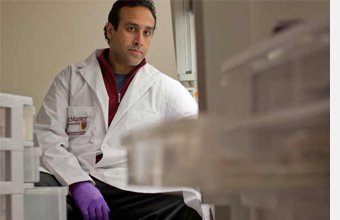
Since the Nobel Prize was awarded to Banting and Macleod in 1923 for their discovery of Insulin, Canada has held a place as one of the top countries for pharmaceutical research in the world. Canadian scientists are still being credited with breakthrough discoveries every year, and there is an explicit need for young talent to enter the industry. It is recognized that historically, young researchers are statistically more likely to conduct breakthrough research. Universities and corporate labs know this, and many commit themselves to finding fresh talent. CIHR, the Canadian Institute of Health Research specifically targets young scientists, offering numerous.. READ MORE »

As a student of pharmaceutical or life sciences (or anyone interested in how science is bettering our world), you will inevitably learn about the latest High Performance Liquid Chromatography (HPLC) techniques and how they fit into different industries. At this point, HPLC is an established technique dating back to the early twentieth century, but over the decades, the process has been refined and simplified. It has evolved from a multi-unit process to a standardized procedure with a single piece of laboratory equipment. HPLC works differently that traditional liquid chromatography because it uses a man-made high-pressure process instead of gravity to.. READ MORE »

We’ve talked a lot about what’s going on in the pharmaceutical industry, in Canada and in the world, but now we’re going to take it back to you, and look at some of the tips that will help you launch and grow your pharmaceutical career. Defining Your Goal– While it’s possible to launch a career with no clear direction plan; you’ll spend your time and effort more efficiently if you have an idea where to go. At AAPS, we pride ourselves on our industry experience, so our faculty can help you get started. But, asides from that, you need to.. READ MORE »
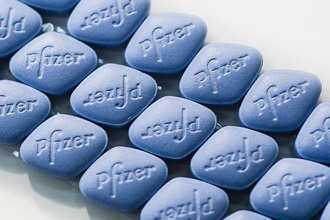
The international pharmaceutical company, Pfizer, has announced a plan to break its entire structure into three segments, two focused on their Innovative line and one on their Value line. Pfizer employs nearly 3,000 Canadians in six locations across the country, and was ranked one of Canada’s top 100 employers for 2012 in a Globe and Mail survey. With products ranging from Celebrex to Chapstick, Pfizer has decided that the split will allow it the flexibility to function as three separate business entities. This is expected to come into effect in 2014, starting with countries that do not require prior union.. READ MORE »
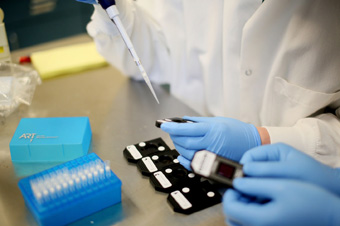
In this year’s “Report Card on Cancer in Canada”, the Cancer Advocacy Coalition of Canada praises the progress of cancer research, but asks that Canadians be given better access to these lifesaving treatments, as well as more emphasis on preventative techniques. In the fight against cancer, successfully targeting the disease means acknowledging that cancer is not a single external problem, but the result of numerous internally manufactured accidents in the cancer patient. Some are facilitated by contaminants like smoking, but today’s smart cancer treatments are tailored to figuring out and targeting the kind of cancer that has affected the patient… READ MORE »

For the pharmaceutical industry, small, lean and agile research firms are the growing trend. Research in the life sciences, as in the cutting edge of any field in Canada, follows a complicated path of private and government investment that mixes for-profit companies with public universities. In this trend, while the big players in the pharmaceutical industry continue to help steer the development of new drugs by providing a large amount of the capital and guidance for the emerging technology, the actual muscle behind the laboratory and clinical research is coming from independent labs with less than 100 people, which makes.. READ MORE »
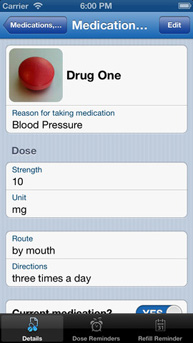
Last month, My MedRec went global. If you’re not familiar with the app, My MedRec is a free system designed on behalf of pharmaceutical industry representative association Rx&D. The iPhone friendly system helps users track their medications, including dosage, timing and drug information. Additionally it creates an easily shareable data that can be sent to doctors, nurses and pharmacists, ensuring seamless medical care. The app makes a lot of sense in the face of the fact that Canadians are the leading smart phone adopters in the world. As well as having some sort of smart phone in their pocket, most.. READ MORE »

As of October, with the inclusion of New Brunswick, every Canadian province will have a catastrophic drug plan in place. These last resort measures protect families from medical bankruptcy and losing access to life saving treatments. There are slight variations in plans, but New Brunswick is adopting a model with no ceiling on spending for assistance. To qualify, candidates must simply exceed a certain percent of family income in drug spending. For the poorest families, this is 3% and for the wealthiest, payments in excess of 12%, assuring universal coverage for those in need, regardless of their backgrounds. This follows.. READ MORE »

At the end of May, four companies announced a recall on five drugs commonly sold in Canada. The recall is not about a problem with the medications themselves, as a treatment. Amlodipine, ciprofloxacin, norfloxacin, lamotrigine and telmisartan are all still considered to be safe and effective in their own right. Instead, the recall affects only certain batches and lot numbers. This issue provides a case study for pharmaceutical quality control from the manufacturing side of things. No pharmaceutical company wants the bad publicity of a recall, but this incident also shows the necessary redundancies in pharmaceutical quality assurance. In this.. READ MORE »