
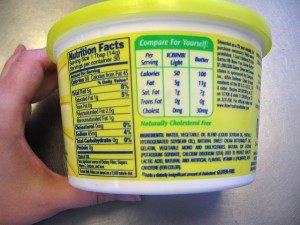
Most of us can relate to food label confusion. We’re already overwhelmed with the sheer number of options staring out from overstuffed grocery store shelves – and the chorus of instructions in our heads to watch out for gluten, dairy, soy, this fat, that sugar, and to quickly calculate how one serving would translate into amounts a real person actually eats…it’s exhausting. For the most part, consumers just end up giving in, throwing the can in the cart and moving on. It’s no wonder North America is plagued by epidemics of obesity, diabetes and general malnutrition – no one really.. READ MORE »
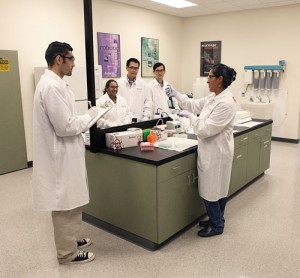
Have you ever enrolled in a class, attended the first lecture and then realized it was nothing like you thought it would be? Perhaps the material was not what you had in mind, the projected assignments seemed out of line with what you’d read in the course description – or maybe you just had a change of heart. No big deal. You just drop the course and sign up for another. But what if you’re already part way through your certification or diploma program and you discover you’ve chosen unwisely? You’ve already invested too much to turn back – switching.. READ MORE »

A recent assessment of Canada’s food safety procedures may prompt consumers to think twice about what’s for dinner. The audit, completed in 2012 but released only last month, evaluated the systems that process meat products being prepared for export to the United States. Inspectors with the U.S. Food Safety and Inspection Service (FSIS) visited two red-meat slaughterhouses, four meat-processing plants, an egg processing plant, five government offices including Canadian Food Inspection Agency (CFIA) headquarters, and two private laboratories between Oct. 22 and Nov. 9, 2012. In the end, FSIS deemed the facilities “adequate,” the lowest possible rating it could issue.. READ MORE »

We’re often told that washing our hands throughout the day will help to ward off germs, sickness and infection. And the best soap to use? Antibacterial, of course. However, according to the FDA, the very product we rely on to shield us from illness may well be making us sick. In a statement released on December 16, FDA officials warned consumers that the active ingredient in antibacterial soaps – triclosan – may be responsible for hormone imbalances and antibiotic resistance. In fact, despite its widespread use there is no clinical research to confirm that antibacterial soap has any added health.. READ MORE »

Where exactly does your food come from? With increasingly convoluted global supply chains, it’s hard to determine the twists and turns our last meal took on its journey from transport to table. According to the FDA, there are 128,000 hospitalizations and 3,000 deaths a year from food-borne illnesses. Health Canada estimates that each year, roughly 4 million people get sick from consuming contaminated food. In 2012, Canada was forced to recall nearly 2000 beef products, the largest recall in its history, when the meat was found to be contaminated with E. coli. Officials were criticized for taking over 10 days.. READ MORE »

As a student of pharmaceutical or life sciences (or anyone interested in how science is bettering our world), you will inevitably learn about the latest High Performance Liquid Chromatography (HPLC) techniques and how they fit into different industries. At this point, HPLC is an established technique dating back to the early twentieth century, but over the decades, the process has been refined and simplified. It has evolved from a multi-unit process to a standardized procedure with a single piece of laboratory equipment. HPLC works differently that traditional liquid chromatography because it uses a man-made high-pressure process instead of gravity to.. READ MORE »

We’ve talked extensively about pharmaceutical careers, but it’s important not to forget one of the other job paths at AAPS: Food safety training for food preparation and manufacturing. Every living person eats. As a result, food safety is a concern for everyone, at every level of the process, from first production to kitchen and all the way to the plate. It is unlikely that you would find a restaurant without food safety certification. In Canada, federal level regulation comes from the Canadian Food Inspection Agency, while individual provinces and municipalities prefer to add their own oversight. Food quality assurance and.. READ MORE »

We’ve talked a lot about issues of interest to people in the pharmaceutical industry, but at AAPS, a commitment to quality control and consumer safety doesn’t stop with drugs and medical manufacturing. We’re also interested in using our knowledge for food safety certification for commercial food handlers of all kinds, and for teaching the BRC food safety standards to food manufacturers. In Ontario, food handling is regulated by laws like the Food Safety and Quality Act of 2001 (last amended in 2009). The highlights of the act include the requirement, alongside regulation 562, that food handlers of all kind have.. READ MORE »