

For the pharmaceutical industry, small, lean and agile research firms are the growing trend. Research in the life sciences, as in the cutting edge of any field in Canada, follows a complicated path of private and government investment that mixes for-profit companies with public universities. In this trend, while the big players in the pharmaceutical industry continue to help steer the development of new drugs by providing a large amount of the capital and guidance for the emerging technology, the actual muscle behind the laboratory and clinical research is coming from independent labs with less than 100 people, which makes.. READ MORE »

The Fraser Institute, a leading Canadian public policy think tank, has joined the chorus of voices asking to extend the life of Canadian pharmaceutical patents. Their report, released this month, suggests that trade with the US and Europe would be streamlined by making the Canadian system more in unity with the two other markets. At the moment, Canada has some of the shortest patent lifespans for a developed country. Discussion on the subject is divided over whether this encourages more internal clinical research and treatment development, or less. Critics of short patent length say it makes the entire sector lose.. READ MORE »

STEM (Science, Technology, Engineering and Medicine) jobs are generally considered to be a vital part of the economy, and one of the hottest sectors for employment and education investment. As an added bonus, STEM offers a unique chance for female researchers and inventors to be on the cutting edge of this century’s new discoveries. Biological and life sciences are experiencing a global boom. From newer and better life extending and improving treatments and technologies, to expanding the understanding of the human body and its potential, medical technology that was science fiction a decade ago is taken for granted. Discoveries in.. READ MORE »
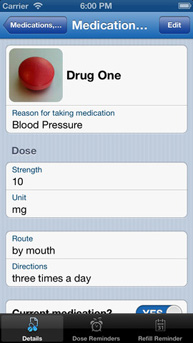
Last month, My MedRec went global. If you’re not familiar with the app, My MedRec is a free system designed on behalf of pharmaceutical industry representative association Rx&D. The iPhone friendly system helps users track their medications, including dosage, timing and drug information. Additionally it creates an easily shareable data that can be sent to doctors, nurses and pharmacists, ensuring seamless medical care. The app makes a lot of sense in the face of the fact that Canadians are the leading smart phone adopters in the world. As well as having some sort of smart phone in their pocket, most.. READ MORE »

As of October, with the inclusion of New Brunswick, every Canadian province will have a catastrophic drug plan in place. These last resort measures protect families from medical bankruptcy and losing access to life saving treatments. There are slight variations in plans, but New Brunswick is adopting a model with no ceiling on spending for assistance. To qualify, candidates must simply exceed a certain percent of family income in drug spending. For the poorest families, this is 3% and for the wealthiest, payments in excess of 12%, assuring universal coverage for those in need, regardless of their backgrounds. This follows.. READ MORE »

A new drug regulation was recently announced in Canada, this time controlling the packaging. That’s the Plain Language Labelling Initiative, which will be an overhaul of how drugs are described on their boxes and bottles. This new initiative aims at altering guidelines for better clarity. While pharmaceutical quality control can ensure that the contents of a package provide exactly the results they’re supposed to, it’s of equal importance to make sure healthcare professionals and consumers are also picking the right products. That means universal standards to prevent confusion between very similarly named or packaged drugs, oversight that is expected to.. READ MORE »

report by Rx&D, the Canadian association of pharmaceutical companies, confirms an ongoing trend of under-reporting of pharmaceutical innovation investment by government bodies. The report, released in May, shows a consistent 34% under-reporting rate over the past three years. Pharmaceutical research investment in Canada is tracked by two government agencies, Statistics Canada and PRPMB (Patented Medicine Prices Review Board). The agencies work independently because they are gathering information for different mandates, and use separate methodology, but both produce similar data. However, Rx&D, which is also responsible for considerable self-regulation in the pharmaceutical industry, decided to track their own investments through studies.. READ MORE »

A recent study of 255 physicians in Canada, the United States and France highlights the important impact of pharmaceutical sales on doctors’ decisions and physicians’ reliance on sales representatives’ willingness to educate them on the full effects of the drugs they are selling. Researchers, who looked at doctors in Montreal, Vancouver, Sacramento and Toulouse, were interested in finding out how willing sales professionals were to discuss side effects of drugs. What they found was that on average, 66% of the Canadian physicians reported that they received no information about adverse side effects whatsoever. Globally, they found that only 6% of.. READ MORE »

Last week we covered a generic drug pricing deal that will affect most of Canada. This week we’re coming back to Ontario to take a closer look at the local impact of the laws on generics. While generic drugs are typically sold at lower prices than the brand name option, for pharmacies, stocking them is more than a matter of choice. In the past, the cost born by the retailer was boosted by two factors: a 13% higher provincial subsidy, greater than the one for branded drugs, and the ability to get a rebate from the manufacturing company of the.. READ MORE »

One of the current challenges in the pharmaceutical industry is the role of generic drugs. This January, several provinces and territories have joined together to put their combined weight to play when it comes to negotiating on generic drug pricing. Generics drugs are an important part of pharmaceutical research, manufacturing and sales. A generic drug is a non-branded version of a medication whose effects are considered comparable to the branded version. They include anything from store brand aspirin to prescription-only pain killers. Generics are cheaper than non-generic drugs and they usually only differ in small matters like flavouring. No matter.. READ MORE »