
In Brief: Sanitation Verification in Food Manufacturing
Sanitation verification in food manufacturing asks a crucial question: did the sanitation process actually achieve its intended result? Visual inspection is useful, but a surface that looks clean may still harbour microorganisms or residues. Depending on the facility and risk, verification can involve pre-operational inspection, surface swabbing, environmental monitoring, testing, record review, and corrective action when results are unacceptable.
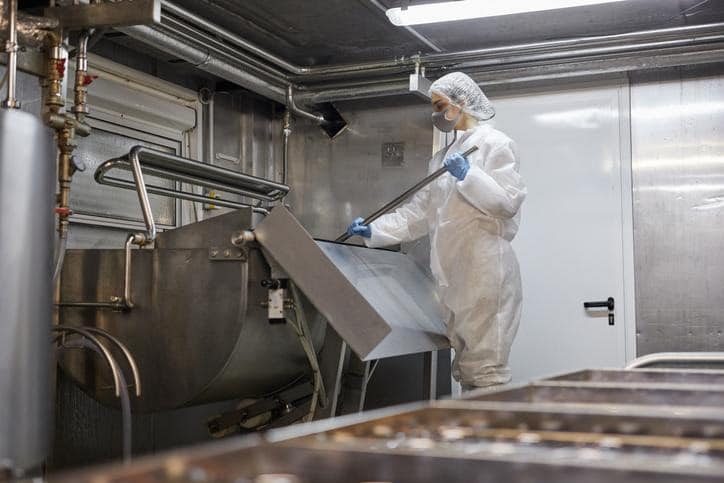
A stainless-steel conveyor can look spotless under bright production-floor lighting. That does not necessarily tell a food safety professional what is happening at the microbiological level.
Health Canada makes this distinction particularly clear for ready-to-eat (RTE) foods: visual observation alone cannot determine the extent to which Listeria species may be present where exposed foods are processed and packaged.
Sanitation verification in food manufacturing has become an important step in the process. Instead of assuming that cleaning worked, food plants gather evidence.
Cleaning, Sanitizing, and Verifying Are Different Steps
What is sanitation verification in food manufacturing? Cleaning removes food residue, soil, grease, and other unwanted material. Sanitizing follows an established process intended to reduce microorganisms to acceptable levels.
Verification comes afterward, or forms part of ongoing monitoring, to determine whether those controls are working as intended.
In AAPS College’s Food Technology, Safety and Quality Diploma program, students learn how these distinctions connect sanitation practices with the larger food-safety system. Verification methods depend on the process and risk. They can include visual inspection, review of sanitation records, surface sampling, environmental monitoring, and microbiological or other appropriate tests.
Why “Looks Clean” Can Be Misleading
Visible residue is an obvious reason to clean again. The harder problem is what cannot be seen.
Microorganisms can persist in difficult areas such as gaps, equipment undersides, hollow components, drains, damaged surfaces, or other harbourage sites. Persistent residues and microbial communities can make biofilms harder to prevent or remove, especially in poorly accessible areas.
This makes equipment design, disassembly, cleaning technique, chemical use, contact time, and verification part of the same sanitation conversation.
A food plant cleaning and sanitation course can help students understand how these practical controls fit into food manufacturing environments.
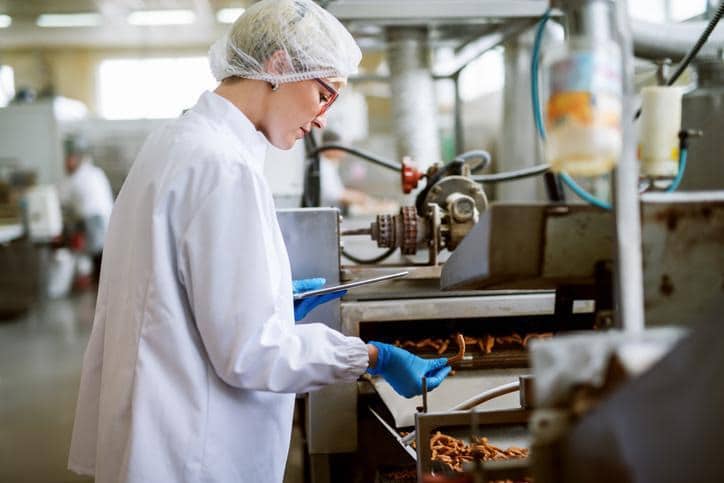
Cleaning and sanitation training connects practical procedures with food-safety verification.
Swabbing Adds Evidence to the Inspection
What is sanitation swabbing? Sanitation swabbing involves sampling selected surfaces so they can be evaluated using an appropriate test.
Health Canada recommends sponges or swabs for environmental sampling of equipment surfaces in RTE facilities. Examples of food-contact sampling locations include conveyor belts, slicers, tables, packaging equipment, hand tools, and difficult-to-clean areas.
Sampling immediately before startup may also be used to verify sanitation effectiveness.
Always ensure that swabbing follows a purposeful plan. Professionals need to consider what they are testing for, where samples should come from, when they should be collected, and what action a result will trigger.
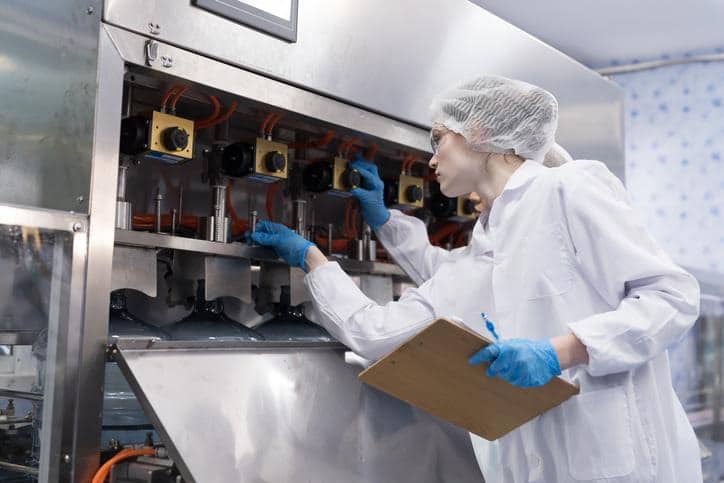
Hard-to-clean areas require particular attention because residues and microorganisms may persist beyond visual inspection.
Environmental Monitoring Looks Beyond Food-Contact Surfaces
A food plant environmental monitoring program can extend sampling beyond surfaces that directly contact food.
Health Canada’s guidance identifies non-food-contact locations such as drains, floors, standing water, cleaning tools, conveyor undersides, cold rooms, overhead pipes, and maintenance tools as potential sampling sites.
Why look there? A positive finding away from food-contact surfaces can reveal a potential harbourage site or contamination route before it becomes a larger problem. Repeated findings can also expose patterns that one isolated test might miss.
Verification is not simply about collecting swabs; it is about interpreting the results, identifying trends, and using investigative sampling to strengthen controls.

Environmental monitoring can reveal contamination patterns and help evaluate sanitation controls.
Sanitation Verification in Food Manufacturing: What Happens When Results Are Unacceptable?
An unacceptable result should lead to action, not merely another entry in a spreadsheet. Depending on the finding, that may mean intensified cleaning and sanitizing, investigative sampling, reviewing procedures, identifying a root cause, resampling, or taking other appropriate corrective measures.
Health Canada recommends timely corrective action following positive environmental findings and using follow-up sampling to determine whether controls have regained effectiveness.
This is where food plant sanitation verification becomes part of continuous food-safety management. Understanding food safety verification and BRCGS requirements allows professionals to see the broader principle: performing a control is one step; demonstrating that the control works is another.
For future food safety and quality professionals, that distinction matters. “It looks clean” is an observation. Verification provides evidence.
Are you looking for a comprehensive Food Technology, Safety and Quality Diploma program?
Contact AAPS for more information.
Key Takeaways
- Cleaning, sanitizing, and verification perform different functions in a food-safety program.
- Visual inspection can identify visible residue but cannot establish microbiological cleanliness.
- Sanitation swabbing can provide additional evidence about surface conditions.
- Environmental programs may sample both food-contact and non-food-contact areas.
- Sampling locations and frequency should reflect the facility, process, and food-safety risk.
- Positive or recurring findings can trigger corrective action, investigative sampling, and process review.
- Trend analysis helps turn individual results into useful information about sanitation performance.
FAQ
What is sanitation verification in food manufacturing?
It is the use of inspections, records, sampling, testing, or other evidence to determine whether sanitation controls are working as intended.
What is sanitation swabbing?
Sanitation swabbing is the collection of a sample from a defined surface using a swab or sponge so that the sample can be tested as part of a plant’s verification or environmental-monitoring activities.
What is the difference between cleaning, sanitation, and sanitation verification?
Cleaning removes soils and residues. Sanitizing reduces microorganisms using an established process. Verification evaluates whether those sanitation activities achieved the required result.
How do food plants verify that equipment and surfaces are clean?
Methods can include visual inspection, record review, surface swabbing, environmental sampling, and appropriate analytical testing. The methods used depend on the facility and food-safety risks.
What role does environmental monitoring play in food safety?
Environmental monitoring can help assess sanitation and other controls, detect potential contamination or harbourage sites, identify trends, and prompt corrective action. Health Canada emphasizes environmental sampling for controlling Listeria in RTE processing environments.