
TL;DR
Risk assessment in cybersecurity helps organizations identify threats, evaluate vulnerabilities, measure business impact, and prioritize security decisions. Future analysts learn that cybersecurity is not only about finding technical flaws, but also about understanding which risks matter most to an organization. Frameworks such as NIST 800-37 and ISO 27005 help guide modern cybersecurity risk management practices by supporting structured analysis, monitoring, and decision-making.
As organizations continue to expand their digital operations, cybersecurity teams face an overwhelming number of alerts, vulnerabilities, and potential threats every day. Not every issue carries the same level of risk, which is why risk assessment has become one of the most important skills within modern cybersecurity operations.
For future analysts, understanding how to evaluate and prioritize risks is critical. In AAPS College’s cybersecurity training environment, students build the kind of analytical thinking needed to connect technical findings with business priorities. Organizations rely on cybersecurity professionals not only to identify weaknesses, but also to help leadership understand which threats require immediate action and which risks can be monitored or managed over time.
This ability to prioritize is what makes risk assessment in cybersecurity such an essential part of modern security work.
What Is Risk Assessment in Cybersecurity?
At its core, risk assessment in cybersecurity is the process of evaluating which security threats matter most to an organization and determining how to address them. Rather than focusing solely on vulnerabilities, analysts must also consider how likely a threat is to occur, what systems are affected, and what the operational or financial impact could be if exploitation succeeds.
The Canadian Centre for Cyber Security describes risk assessment as part of a broader risk management process designed to support informed security decisions.
This broader perspective is a major part of effective cybersecurity risk management. Future analysts quickly learn that a vulnerability alone does not automatically equal a serious business risk.
Through career-focused cybersecurity training, AAPS students are introduced to the importance of context, including system exposure, business impact, and the role security teams play in practical decision-making. A flaw affecting a low-priority internal system may carry far less urgency than a moderate vulnerability affecting a critical internet-facing platform.
Why Cybersecurity Professionals Need to Understand Risk Scoring
Modern organizations often manage thousands of vulnerabilities, security alerts, and system events simultaneously. Risk scoring helps analysts determine which issues deserve immediate attention and which can be monitored or addressed later. This is the type of practical decision-making mindset students can begin developing through AAPS College’s applied cybersecurity diploma program, where technical concepts are connected to workplace expectations.
A strong threat assessment process supports better decision-making by helping security teams prioritize mitigation efforts, allocate resources effectively, and reduce operational disruption. It also allows analysts to communicate more clearly with management about why certain risks deserve urgent action.
One of the most important lessons future analysts learn is the difference between technical severity and actual business risk. A technically severe vulnerability may pose limited danger if isolated from critical infrastructure. Meanwhile, a medium-severity issue may require immediate action if it affects sensitive systems, public-facing services, or heavily targeted environments.
This is why modern cybersecurity risk management increasingly considers factors such as exploitation activity, operational impact, system exposure, compliance obligations, and business continuity concerns.

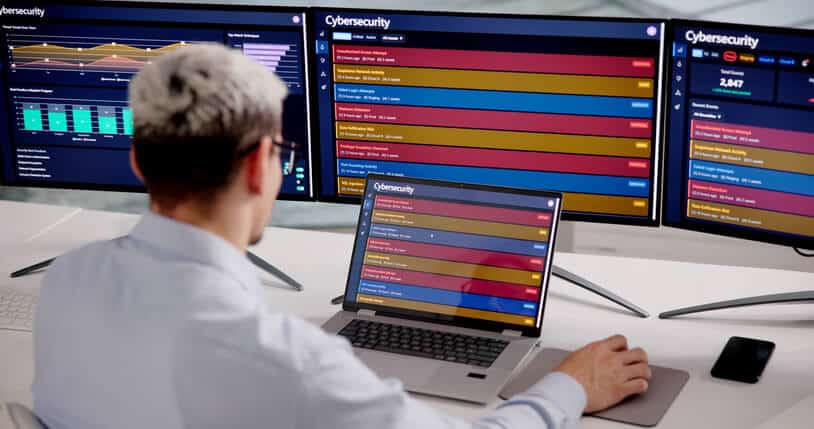
Modern cybersecurity analysts must evaluate both technical vulnerabilities and business impact.
Technical Threats vs Business Risks
One of the biggest shifts students experience during cybersecurity training is learning how to translate technical findings into business language. Security professionals may identify vulnerabilities, weak configurations, phishing risks, malware activity, or unauthorized access attempts, but executives and decision-makers often focus more heavily on the operational consequences of those threats.
A successful cyberattack could affect customer trust, regulatory compliance, revenue, operational uptime, or public reputation. Because of this, analysts must learn how to explain why a technical issue matters in practical business terms.
Frameworks such as ISO 27005 emphasize structured risk analysis and business-focused decision-making. This helps organizations move beyond purely technical discussions and focus instead on organizational resilience, operational continuity, and strategic priorities.
Why Frameworks Like NIST 800-37 and ISO 27005 Matter
Cybersecurity frameworks help organizations create consistent and repeatable approaches to managing cyber risk. Instead of relying on guesswork, companies use structured frameworks to guide risk analysis, security controls, monitoring, and governance practices.
For students entering the AAPS cybersecurity diploma program, learning about frameworks such as NIST 800-37 supports the Risk Management Framework (RMF), and ISO 27005, which helps build familiarity with how real organizations approach cybersecurity governance, risk assessment, monitoring, and decision-making.

Risk management frameworks support structured decision-making in cybersecurity operations.
How Does Risk Assessment Connect to Policy Development?
Risk assessments often shape the policies and procedures organizations use to protect systems and information. If analysts identify repeated weaknesses involving passwords, access management, or insecure configurations, organizations may respond by introducing stronger security policies or additional monitoring controls.
For example, risk findings may influence:
- Password policies
- Multi-factor authentication requirements
- Vendor access controls
- Employee awareness training
- Security monitoring procedures
This means risk assessment in cybersecurity directly affects how organizations build security programs and reduce long-term exposure to threats. This is also where AAPS’s career-focused approach can help students see cybersecurity as a broader professional field, not only a technical support function. Risk management connects technical knowledge with communication, policy, compliance, and organizational decision-making.

Budding cybersecurity analysts learn how to evaluate threats, prioritize risks, and support business-focused security decisions.
Can Risk Management Lead to Non-Technical Cybersecurity Career Paths?
Yes. Not every cybersecurity role focuses entirely on hands-on technical operations. Many professionals work in governance, compliance, auditing, consulting, policy development, vendor risk assessment, or cybersecurity strategy.
Through cybersecurity training in Ontario, students can develop both the technical and analytical abilities needed to understand modern risk management practices and organizational security priorities.
If you’re ready to begin cybersecurity career training, AAPS College can help you build practical skills in risk assessment, threat evaluation, and security decision-making.
Contact AAPS College today to learn more about the cybersecurity diploma program.
Key Takeaways
- Risk assessment in cybersecurity helps organizations determine which threats deserve priority attention
- Effective cybersecurity risk management combines technical analysis with business impact evaluation
- Frameworks such as NIST 800-37 and ISO 27005 support structured risk assessment practices
- Analysts must understand the difference between technical severity and real-world business risk
- Risk management skills can support both technical and non-technical cybersecurity career paths
FAQ
What is risk assessment in cybersecurity?
It is the process of identifying threats, vulnerabilities, likelihood of exploitation, and potential business impact in order to prioritize cybersecurity decisions.
How does risk assessment connect to policy development?
Risk assessments help organizations create security policies, access controls, monitoring procedures, and other safeguards designed to reduce identified risks.
Why do cybersecurity professionals need to understand risk scoring?
Risk scoring helps organizations prioritize security issues, allocate resources effectively, and respond more efficiently to serious threats.
What is the difference between a technical threat and a business risk?
A technical threat involves a cybersecurity weakness or vulnerability, while a business risk focuses on the operational, financial, legal, or reputational impact of that threat.
Are ISO 27005 and NIST frameworks important for entry-level students?
Yes. These frameworks introduce structured approaches to cybersecurity governance, risk assessment, monitoring, and compliance practices used in real organizations.
Can risk management lead to non-technical cybersecurity career paths?
Yes. Risk management can lead to roles involving governance, compliance, policy development, auditing, consulting, and cybersecurity strategy.