

In Brief: Front-of-Package Nutrition Labelling Checks in Canada
- Since January 1, 2026, applicable prepackaged foods must comply with Canada’s front-of-package nutrition symbol requirements.
- Symbols identify foods that meet or exceed specified thresholds for saturated fat, sugars, or sodium.
- Food quality teams assess nutrient values, exemptions, and labelling requirements before approving packaging.
- Accurate artwork, documentation, and change control help manufacturers maintain compliance.
A food manufacturer is preparing updated packaging for a popular snack. The ingredient list is correct, the Nutrition Facts table has been reviewed, and the design is almost ready for printing. But one important question remains: does the product need a nutrition symbol on the front of the package?
With front-of-package nutrition labelling in Canada now an established regulatory requirement, questions like this are part of routine packaging reviews. Food quality and regulatory professionals must look beyond the visual design to examine nutrient calculations, exemptions, and precise labelling specifications. Understanding these checks offers aspiring food industry professionals a practical look at how regulatory knowledge supports packaging approval.
The Importance of Canada’s Front-of-Package Nutrition Symbol
Canada’s front-of-package nutrition symbol is a standardized label identifying prepackaged foods that meet or exceed specified thresholds for saturated fat, sugars, or sodium. It features a magnifying glass design and identifies the applicable nutrients with statements such as High in sodium or High in sugars.
The symbol helps consumers recognize certain nutritional characteristics without searching through the entire Nutrition Facts table. Since January 1, 2026, applicable products manufactured, imported, or packaged at retail must comply with the requirements. Products prepared before that date may continue to be sold under the transitional provisions.
How Do Food Quality Teams Determine Whether a Product Needs a Symbol?
The first step is establishing whether the product falls within the scope of the regulations.
Teams must review its classification, ingredients, reference amount, serving size, and nutrient composition. They must also determine whether any exemption or prohibition applies.
For products subject to the thresholds, the nutrition symbol requirements generally follow three categories:
Product category | Threshold for saturated fat, sugars, or sodium |
Most prepackaged foods | 15% or more of the applicable Daily Value |
Foods with a reference amount of 30 g or 30 mL or less | 10% or more of the applicable Daily Value |
Prepackaged main dishes meeting specified reference amounts | 30% or more of the applicable Daily Value |
The 30% threshold applies to qualifying main dishes with reference amounts of at least 200 g for the general population or 170 g for foods intended solely for children aged one to under four.
For the nutrient assessment, teams generally use the greater of the product’s reference amount and stated serving size, following the applicable regulatory rules. They must also evaluate saturated fat separately when determining whether a symbol is required. Although the Nutrition Facts table reports a combined Daily Value percentage for saturated and trans fats, the front-of-package threshold calculation considers saturated fat alone.
Consider a hypothetical packaged food with a reference amount of 30 g. If its sodium content reaches 12% of the Daily Value in the quantity used for assessment, it meets the 10% threshold for products with small reference amounts. The quality team would then check whether an exemption or prohibition applies before deciding whether the nutrition symbol must appear.
This is why reviewing the Nutrition Facts table alone isn’t enough. The team needs to understand how the product is classified and which regulatory requirements apply.

Nutrient values, reference amounts, and serving sizes help determine whether a nutrition symbol is required.
Products That May Be Exempt From Nutrition Symbol Requirements
Not every food that contains substantial amounts of saturated fat, sugars, or sodium must display the symbol. Canadian regulations establish full exemptions, conditional exemptions, and prohibitions for particular product categories.
For example, some foods are exempt because of their nutritional characteristics or established labelling requirements. Other exemptions depend on ingredients, processing, or whether specific conditions are met.
A conditional exemption may no longer apply after a formulation change. Quality teams must therefore verify the product’s current characteristics rather than assume that a previous exemption remains valid. The CFIA’s front-of-package nutrition symbol guidance provides the regulatory framework for these assessments.
What Must Teams Check Before Approving Packaging Artwork?
Once a team determines that a symbol is required, attention shifts to the packaging design. The symbol must use an approved format and follow prescribed specifications for size, language, colour, orientation, visibility, and placement.
A correct nutrient calculation does not compensate for an incorrectly formatted label.
Before approving artwork, reviewers compare current product data with the proposed nutrition symbol. They check whether all applicable nutrients are identified, confirm that the bilingual format and package-specific placement meet regulatory requirements, and ensure the final proof matches the approved product formulation.
These requirements form part of the broader packaging review process outlined below.
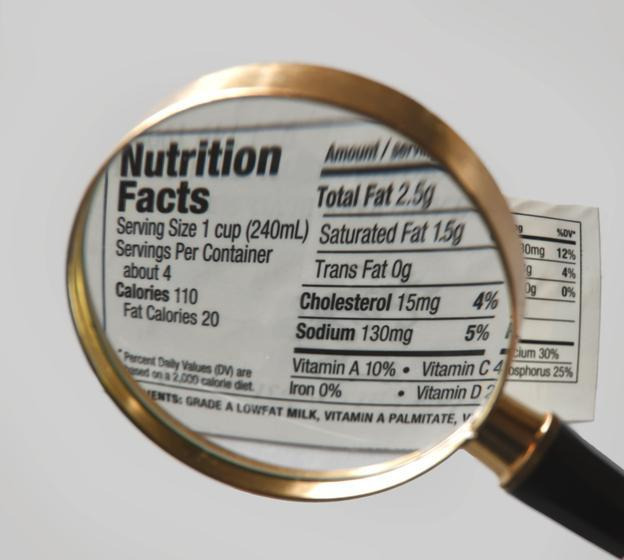
Approved nutrition symbol artwork must follow Canada’s prescribed formatting and placement specifications.
Exploring the Practical Front-of-Package Label Review Checklist
Before packaging is approved for printing, food quality and regulatory teams need to confirm that the nutrition symbol accurately reflects the product and meets Canadian labelling requirements. A structured checklist helps reviewers catch inconsistencies early and maintain a clear record of their decisions.
A typical review may involve seven checks:
- Verify product information: Confirm that the ingredient formulation, nutrient values, serving size, and reference amount are accurate and up to date.
- Assess nutrient thresholds: Determine whether saturated fat, sugars, or sodium meet or exceed the applicable thresholds for the product category.
- Check exemptions: Review whether the product qualifies for an exemption or is subject to a prohibition under Canada’s front-of-package nutrition labelling regulations.
- Select the correct symbol: Ensure that the symbol identifies all nutrients that trigger the requirement and uses the prescribed format.
- Review packaging artwork: Check the symbol’s size, placement, orientation, language, and visibility against regulatory specifications.
- Confirm label consistency: Compare the packaging proof with the approved formulation and Nutrition Facts table to identify discrepancies.
- Document the approval: Record the review findings, required corrections, final artwork version, and approval decisions.
These checks also support ongoing food label compliance. If a manufacturer changes a recipe, serving size, or packaging design, the team can revisit the relevant steps rather than assume that the previous approval still applies.
The checklist is an illustrative quality assurance workflow, not an official CFIA checklist. Actual review procedures must reflect the product’s characteristics and applicable regulatory requirements.
Formula and Packaging Changes Require Continuous Reviews
A label approved last month may no longer be accurate after a product reformulation. Changing an ingredient supplier, adjusting sodium content, modifying serving sizes, or redesigning the package could affect the symbol assessment or artwork.
Quality teams need documented change-control procedures to ensure that updated product information reaches the people responsible for packaging approval. In our food quality assurance and quality control course, students learn how recordkeeping, verification, and corrective actions support regulatory compliance.
How Does Food Regulatory Training Prepare Students for Label Review Work?
Reviewing nutrition symbols requires more than memorizing thresholds. Professionals must interpret regulations, evaluate product data, communicate findings, and recognize when specialist review is needed.
AAPS College’s food regulations course provides a relevant foundation for understanding how regulatory requirements affect food products and packaging.
Combined with quality assurance knowledge, food regulatory training can help prospective professionals understand how food businesses organize compliance reviews and maintain accurate product documentation.

Documented packaging reviews help manufacturers maintain label accuracy when products or regulations change.
Explore Food Technology, Safety and Quality Training at AAPS College
Front-of-package nutrition symbols demonstrate how regulatory interpretation and quality assurance intersect in everyday food industry operations. Explore AAPS College’s Food Technology, Safety and Quality diploma to review the curriculum and see how food regulations and quality assurance fit together in preparation for food industry responsibilities.
Are you looking for a comprehensive Food Technology, Safety and Quality diploma?
Contact AAPS College for more information.
Key Takeaways
- Canada’s front-of-package nutrition symbol requirements became mandatory for applicable products on January 1, 2026.
- The symbol identifies products that meet or exceed specified thresholds for saturated fat, sugars, or sodium.
- Thresholds vary by product category, and exemptions or prohibitions must be considered before deciding whether a symbol is required.
- Packaging approval involves verifying nutrient data, symbol selection, language, placement, dimensions, and artwork consistency.
- Formulation changes and packaging revisions may trigger another compliance review.
- Food regulations and quality assurance knowledge are relevant to professionals responsible for food labelling and packaging documentation.
FAQ
What is Canada’s front-of-package nutrition symbol?
Canada’s front-of-package nutrition symbol is a standardized label that identifies prepackaged foods containing saturated fat, sugars, or sodium at or above specified regulatory thresholds. It is designed to make this information easier for consumers to recognize.
How do teams determine whether a product needs a symbol?
Food quality and regulatory teams review the product category, nutrient composition, reference amount, and serving size. They calculate the applicable nutrient percentages and check whether any exemptions or prohibitions apply before determining which symbol, if any, is required.
Why must packaging artwork match the product’s nutrition information?
Packaging must accurately represent the food being sold. If the product’s nutrient content changes but its packaging does not, the symbol may identify the wrong nutrients or omit a required declaration. Comparing approved artwork against current product data helps prevent these inconsistencies.
How does food regulations training support label review work?
Food regulations training introduces the regulatory principles that influence food packaging, nutrition declarations, and compliance decisions. When combined with quality assurance knowledge, it helps students understand how businesses review labels, verify documentation, and respond to product or regulatory changes.