
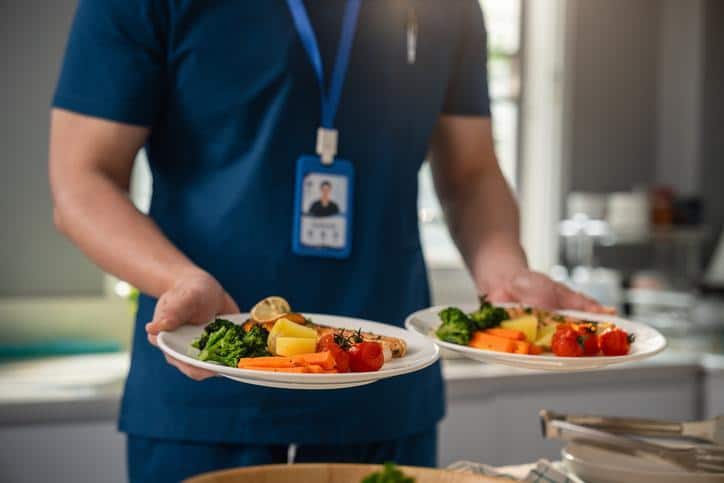
In Summary: Special Diets in Healthcare Food Service at AAPS College
- Special diets are meals adapted to meet specific medical, nutritional, or documented dietary needs.
- Healthcare facilities may provide sodium-restricted, carbohydrate-managed, texture-modified, or allergen-controlled meals.
- Nutrition managers help translate approved dietary instructions into accurate, consistent food service.
- Menu planning must consider nutritional adequacy, safe preparation, and individual preferences.
- AAPS College’s Food and Nutrition Management Diploma explores the knowledge needed to support these responsibilities.
Special diets in healthcare food service are meals modified to meet a patient’s or resident’s specific dietary requirements. These modifications may involve nutrients, ingredients, food textures, or fluid consistency.
Imagine preparing lunch for three residents in a long-term care home. One needs a sodium-restricted meal, another has a documented food allergy, and the third requires a texture-modified diet because of swallowing difficulties.
Everyone needs a satisfying lunch, but serving the same meal to all three could create serious problems.
That’s where nutrition and food service professionals come in. Their work helps ensure that each person receives food that meets their documented needs without overlooking taste, variety, or dignity.
How Dietary Modifications Are Used in Healthcare Settings
Dietary modifications help people meet nutritional requirements while managing medical conditions, swallowing difficulties, or food-related risks. For example, therapeutic diets in healthcare may be prescribed as part of care for conditions such as kidney disease, diabetes, or cardiovascular disease.
A person with dysphagia may require a specific food texture or fluid thickness to support safer swallowing. Someone with a food allergy needs meals that avoid the relevant allergen and prevent cross-contact. These decisions are made by authorized healthcare professionals according to the person’s clinical needs. Food service teams then help implement the approved instructions.
Good nutrition is also an important part of recovery and ongoing care. Our article on nutrition management and patient recovery explores that connection further.
What Types of Special Diets Might Nutrition Managers Encounter?
Healthcare food service professionals may encounter several dietary modifications, sometimes within the same meal.
| Dietary Requirement | Example of a Menu Consideration |
|---|---|
| Sodium restriction | Preparing meals with controlled sodium content |
| Carbohydrate management | Providing appropriate carbohydrate portions and distribution |
| Renal dietary restrictions | Adjusting specified nutrients according to an individualized plan |
| Texture-modified meals | Preparing food to the prescribed texture level |
| Food allergies | Excluding identified allergens and preventing cross-contact |
These are examples, not interchangeable meal plans. Two people with the same diagnosis may have different dietary prescriptions.
For texture-modified meals, the IDDSI Framework provides standardized descriptions and testing methods for food textures and drink thicknesses. Staff must follow the levels specified in each person’s care instructions.

Adapting Menus for Different Dietary Requirements
Effective special diet menu planning starts with accurate dietary instructions and continues through preparation, identification, and meal delivery.
Suppose a resident needs a texture-modified lunch. The kitchen can’t simply blend an ordinary meal and assume it’s suitable. Staff must prepare the prescribed texture, use approved preparation methods, and check the finished food against applicable standards.
Nutrition managers also need to consider whether the modified meal provides adequate nutrition and remains appealing.
A successful menu is one that people can safely eat and enjoy, not merely one that meets a checklist. AAPS College’s special diets training introduces dietary modifications for different health conditions, the nutritional needs of older adults, balanced menu development, and special nutrition requests.
Who Is Responsible For Ensuring Patients Receive the Correct Meals
Clinical staff, dietitians, nutrition managers, and food service teams share responsibility for ensuring the right meal reaches the right person.
Registered dietitians and other authorized clinicians determine or approve therapeutic dietary requirements within their professional responsibilities. Nutrition managers oversee the food service processes that help put those instructions into practice.
In healthcare nutrition management, that can mean coordinating menus, maintaining accurate diet information, adjusting recipes, training staff, checking meal trays, and addressing discrepancies.
If a resident’s dietary requirements are updated mid-day without reaching kitchen staff promptly, an incorrect meal might be served. Clear communication and verification procedures help prevent these errors.

Food Safety and Consistency Including Special Diets
Food safety matters for every meal, but certain dietary requirements demand additional attention.
For someone with a severe food allergy, avoiding an ingredient isn’t enough if utensils, preparation surfaces, or equipment allow cross-contact. For someone receiving texture-modified food, consistency matters too. A meal that doesn’t meet the prescribed texture could create a swallowing hazard.
Nutrition managers therefore need dependable procedures, staff communication, and quality checks. The goal is to make safe preparation part of everyday operations rather than relying on someone to catch a mistake at the last minute.

How Can You Prepare for a Career in Healthcare Nutrition Management?
If you enjoy organizing food service operations and want your work to contribute to patient care, understanding special diets is an important place to start.
In our Food and Nutrition Management Diploma Program, you’ll explore nutrition, clinical nutrition, food safety, quantity food preparation, quality management, and food service operations.
Together, these subjects help you understand the connection between individual dietary requirements and the practical work of running a food service operation.
Are you looking for a comprehensive Food and Nutrition Management Diploma Program?
Contact AAPS College for more information.
Key Takeaways
- Special diets address individual clinical, nutritional, and documented dietary requirements.
- Healthcare food service teams implement approved dietary instructions rather than independently prescribing therapeutic diets.
- Menu planning must balance nutrition, food safety, consistency, and patient preferences.
- Communication and meal verification help reduce the risk of dietary errors.
- AAPS College’s Food and Nutrition Management Diploma covers nutrition, special diets, food safety, and operational management.
FAQ
What Are Special Diets in Healthcare Food Service?
Special diets are meals adapted to meet specific dietary requirements, including nutrient restrictions, food allergies, or prescribed food textures and fluid consistencies.
Why Are Dietary Modifications Used in Healthcare Settings?
Dietary modifications help address medical conditions, nutritional needs, swallowing difficulties, and food-related safety risks. They are based on individual assessments and approved care instructions.
What Types of Special Diets May Food Service Professionals Encounter?
Examples include sodium-restricted diets, carbohydrate-managed diets, renal dietary modifications, texture-modified diets, and allergen-controlled meals. Requirements vary according to the individual.
How Are Menus Adapted for Different Dietary Requirements?
Menus are adapted by following approved dietary instructions, selecting suitable ingredients, adjusting preparation methods, verifying nutrient or texture requirements, and maintaining safe food handling.
Who Is Responsible for Ensuring Patients Receive the Correct Meals?
Responsibility is shared. Authorized healthcare professionals establish dietary requirements, while nutrition managers and food service staff help ensure meals are prepared, identified, and delivered according to those instructions.