
TL;DR
Understanding network fundamentals for information technology is essential for support professionals. Knowledge of networking basics, troubleshooting steps, and infrastructure components allows IT support teams to diagnose connectivity issues and maintain stable network systems.
Technology support professionals solve problems that often trace back to the same source: the network. Understanding network fundamentals for information technology is critical for anyone working in support roles. Whether diagnosing a slow connection, restoring access to shared drives, or resolving system outages, networking knowledge allows IT professionals to identify issues quickly and efficiently.
For students entering technology careers, networking fundamentals form the backbone of effective troubleshooting and infrastructure management.
What Are Network Fundamentals?
Network fundamentals refer to the core principles that allow devices to communicate with one another across a network.
These principles include understanding how devices connect, how data travels, and how communication protocols enable reliable information exchange. In simple terms, networking allows computers, servers, printers, and mobile devices to share information and resources.
According to Cisco, networking enables devices to exchange data using standardized communication methods across wired or wireless connections. These foundational ideas form the basis of modern information technology infrastructure.
Key Basic Networking Concepts Every IT Support Professional Should Know
Support professionals regularly work with the building blocks of networks. These basic networking concepts include understanding how routers direct traffic, how switches connect devices within a network, and how access points enable wireless communication.
Another important concept is IP addressing. Every device connected to a network requires a unique address so data can be delivered to the correct destination.
Cloudflare explains that computer networks rely on layered protocols to move data between devices, ensuring reliable communication across complex systems. For IT support professionals, recognizing how these components interact helps isolate the source of technical problems.
Students enrolled in the AAPS colleges’ IT Support certification program gain exposure to networking principles alongside operating systems, hardware troubleshooting, and security fundamentals.

Network fundamentals for information technology are essential for resolving support issues.
Why Networking Is Important in Support Roles
Why is networking important in support roles? Many of the most common technical issues originate from network-related problems. For example, a user may report that they cannot access a shared file server, connect to a company printer, or load an internal application. While the issue might appear to be a software failure, the root cause is often a network disruption.
Understanding network troubleshooting basics allows support professionals to determine whether the issue lies with a user device, a network configuration error, or an infrastructure failure.
Without strong networking knowledge, diagnosing these problems becomes significantly more difficult.
Common Connectivity Issues IT Support Professionals Encounter
One of the most common responsibilities for technology support staff is diagnosing connectivity issues.
Problems may arise when devices cannot communicate with a network, when internet access becomes unstable, or when internal services become unreachable. In some cases, a simple configuration error, such as an incorrect IP address or network gateway, may be responsible.
In other situations, the issue may originate from hardware components such as switches, routers, or damaged cables. Wireless interference can also cause inconsistent connections in office environments.
Understanding how to systematically investigate these situations is what separates effective support professionals from those who rely on guesswork.

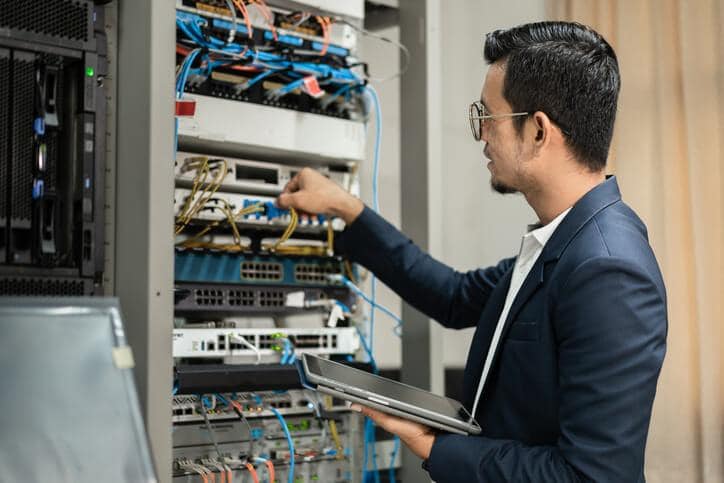
Routers, switches, and cables form the backbone of network fundamentals for information technology.
Network Fundamentals for Information Technology for IT Support Professionals
Strong network troubleshooting basics follow a structured process. Rather than immediately replacing equipment or escalating the problem, experienced support professionals verify each part of the connection.
The process typically begins with confirming the user’s issue and verifying physical connectivity. Technicians then check network configurations, IP assignments, and system settings before examining infrastructure devices such as routers or switches.
By narrowing down the possible causes step by step, IT support professionals can resolve issues efficiently and prevent recurring problems.
Students pursuing IT Support training often practice these diagnostic approaches during hands-on exercises designed to simulate real-world support scenarios.

Networking knowledge is essential for understanding network fundamentals in information technology.
Building a Career in Technology Support
Networking knowledge is a foundational skill for anyone entering the technology field. Even professionals who specialize in cybersecurity, cloud computing, or systems administration rely on networking concepts daily.
Programs such as the Information Technology Support and Systems Administration Certificate at AAPS College help learners build the technical foundation needed to support modern IT environments. By mastering networking fundamentals early in their careers, aspiring support professionals position themselves for growth across many areas of technology.
Are you looking for comprehensive IT Support training?
Contact AAPS College for more information.
Key Takeaways
- Network fundamentals for information technology are essential for troubleshooting and maintaining systems.
- Basic networking concepts include routers, switches, IP addressing, and communication protocols.
- Many common technical problems originate from network connectivity issues.
- Structured troubleshooting helps support professionals diagnose problems efficiently.
- Networking knowledge forms the foundation for many technology careers.
FAQ
What are network fundamentals?
Network fundamentals refer to the core principles that allow devices to communicate with one another across a network.
Why is networking important in support roles?
Many of the most common technical issues originate from network-related problems. For example, a user may report that they cannot access a shared file server, connect to a company printer, or load an internal application.
What skills are required for entry-level technology support?
Entry-level IT support professionals benefit from skills in networking fundamentals, operating system troubleshooting, hardware support, and customer communication.