

TL;DR
Incident response playbooks help cybersecurity teams respond to security incidents quickly and consistently, while business continuity cybersecurity planning helps organizations continue operating during disruptions. Together, these frameworks reduce downtime, protect critical systems, and support recovery. Students in the Applied Cybersecurity Engineer Diploma Program at AAPS College gain exposure to the concepts, tools, and methodologies that modern cybersecurity teams use to prepare for and manage real-world incidents.
Cyberattacks rarely follow a predictable script. A ransomware attack, phishing campaign, or compromised system can create confusion and pressure within minutes. During these situations, organizations need more than technical expertise; they need a plan.
That is where incident response playbooks become essential. These structured guides help security teams understand what actions to take, who is responsible for each task, and how to communicate throughout an incident. At the same time, organizations must ensure critical operations continue running. This is where business continuity cybersecurity planning becomes equally important.
Together, these two disciplines form a crucial foundation of modern cybersecurity operations.
What Are Incident Response Playbooks?
Incident response playbooks are documented procedures that guide cybersecurity teams through specific types of security incidents. Rather than making decisions under pressure, analysts can follow established workflows that outline containment, investigation, communication, and recovery steps.
Many organizations build playbooks for common threats such as phishing attacks, malware infections, unauthorized access attempts, or data breaches. These documents help teams respond consistently and reduce the likelihood of mistakes during stressful situations.
Public Safety Canada’s guidance on cybersecurity fundamentals highlights the importance of defined roles, cybersecurity planning, and readiness to respond to security incidents, while NIST incident response guidance outlines key phases such as preparation, detection and analysis, containment, eradication, and recovery.
Why Is Business Continuity Important During a Cyber Incident?
While security teams focus on stopping a threat, business leaders are often asking a different question: how do we keep operating?
This is where business continuity cybersecurity planning comes into play. Business continuity focuses on maintaining essential services and operations even when systems are disrupted. For example, a healthcare provider may need to continue accessing patient information, while a financial institution must maintain customer services despite a security event.
Without continuity planning, even a relatively small cyber incident can create significant operational and financial consequences.
Organizations that combine strong incident response procedures with continuity planning are generally better positioned to minimize disruption and recover more quickly.

Business continuity planning helps organizations maintain critical operations during disruptions.
What Is the Difference Between Disaster Recovery and Business Continuity?
Students often encounter both concepts early in their cybersecurity education. Disaster recovery planning focuses primarily on restoring systems, applications, and data after an incident. The goal is to return affected technology to normal operation as efficiently as possible.
Business continuity, however, focuses on maintaining critical operations during the disruption itself. In other words, business continuity helps organizations keep functioning, while disaster recovery helps them return to normal.
Understanding this distinction is important because cybersecurity professionals frequently work alongside IT, management, and operations teams during both phases.
Do Entry-Level Cybersecurity Professionals Need to Understand Digital Forensics?
Yes. While advanced forensic investigations are often performed by specialists, understanding digital forensics basics is increasingly valuable for entry-level professionals.
When a security incident occurs, analysts need to preserve evidence, review logs, identify indicators of compromise, and support investigations without accidentally altering critical information.
These foundational skills help analysts understand how incidents unfold and contribute to effective response efforts.
Students enrolled in the Applied Cybersecurity Engineer Diploma Program develop knowledge of cybersecurity operations, threat analysis, and incident management concepts that support these responsibilities.

Cybersecurity students benefit from learning real-world incident response frameworks.
How Tabletop Simulations Prepare Students for Real Incidents
One of the most effective ways to learn incident response is through practice. Tabletop exercises simulate realistic cybersecurity scenarios and require participants to work through response decisions as a team. These exercises help students understand communication processes, escalation procedures, and decision-making under pressure.
At AAPS College, practical learning is an important part of preparing students for cybersecurity careers. In addition to technical instruction, students benefit from career-focused support through AAPS College’s career services and job support resources.
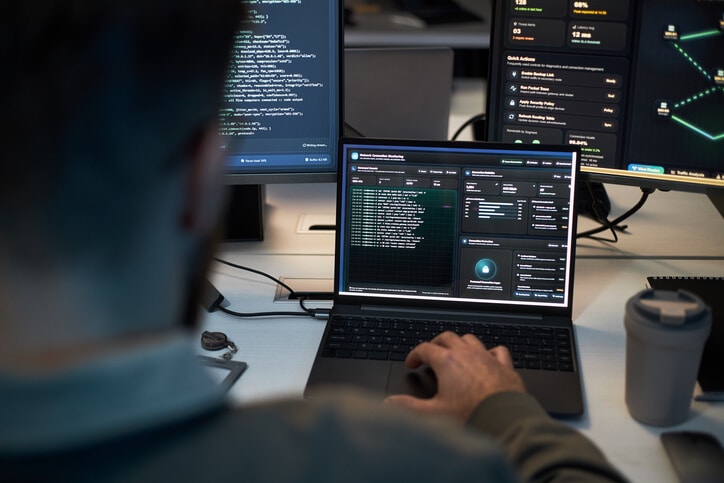
Incident response and recovery planning work together to reduce organizational risk.
As graduate Sedigheh Fadaye Vatan shared:
“The instructors are industry-experienced in a supportive learning environment. Field-related internships give students real-world experience. Students also receive ongoing job search assistance and career services from AAPS College.”
This combination of technical training and career preparation helps students build confidence as they enter the cybersecurity field.
Would you like to explore training options at AAPS College?
Contact us for more information.
Key Takeaways
- Incident response playbooks provide structured guidance during security incidents.
- Business continuity cybersecurity planning helps organizations maintain operations during disruptions.
- Disaster recovery planning focuses on restoring systems after an incident.
- Understanding digital forensics basics supports effective incident investigations.
- Tabletop exercises help students develop practical incident response skills.
- AAPS College combines technical cybersecurity training with career support and industry-focused learning.
FAQ
What are incident response playbooks?
An incident response playbook is a documented set of procedures that guides cybersecurity teams through specific types of security incidents.
Why is business continuity important during a cyber incident?
Business continuity helps organizations continue critical operations while security teams investigate and resolve the incident.
What is the difference between disaster recovery and business continuity?
Business continuity focuses on maintaining operations during a disruption, while disaster recovery focuses on restoring systems afterward.
Do entry-level cybersecurity professionals need to understand digital forensics?
Yes. Understanding digital forensics basics helps analysts support investigations, preserve evidence, and identify indicators of compromise.
How do tabletop simulations help students prepare for real incidents?
Tabletop exercises allow students to practice response procedures, communication strategies, and decision-making in realistic cybersecurity scenarios.
Why are structured response plans important for organizations?
Structured plans improve consistency, reduce confusion during incidents, and help organizations respond more effectively to cybersecurity threats.